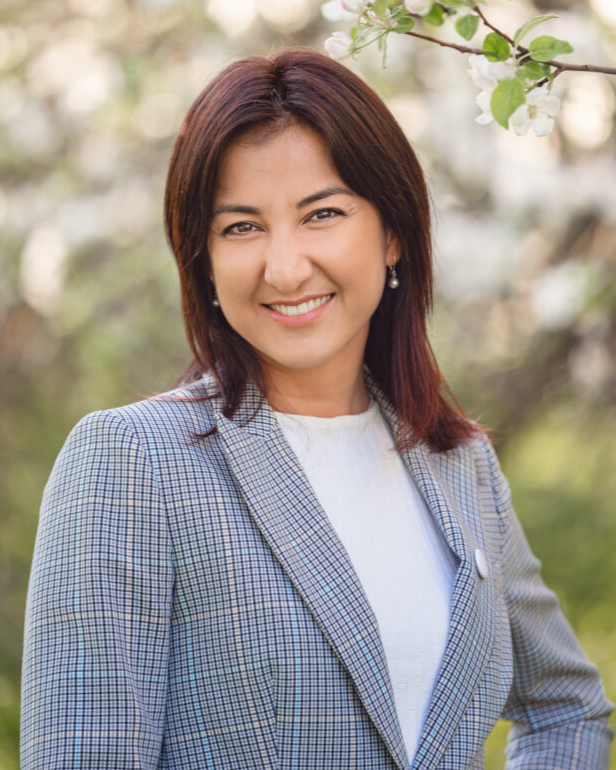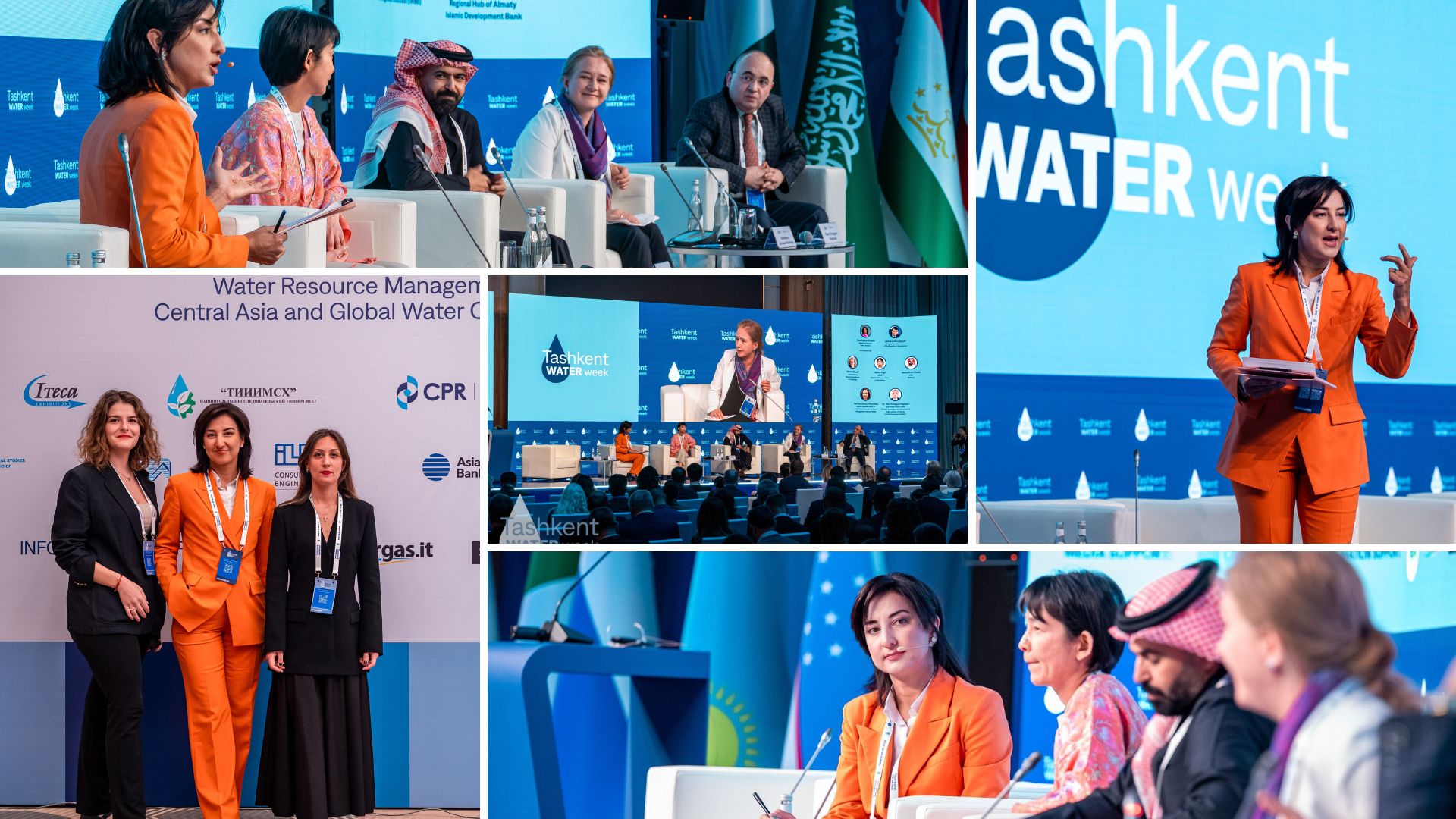
A reflection on moderating Tashkent Water Week and the Tashkent Water Security Forum, and what it takes to hold a room where scientists, ministers, investors and policymakers all need to leave with something usable.
There are events you moderate. And there are events that ask everything of you.
Tashkent Water Week 2026 and the Tashkent Water Security Forum at TIIAME National Research University were the second kind.
Three days. Two distinct audiences. One shared problem.
I came home tired. I came home full. And I came home with a sharper sense than ever of what cross-sectoral moderation actually requires, and why so few practitioners can do it well.
This is a longer reflection than usual, because the engagement itself was longer and more demanding than usual. If you are an organisation considering booking me for a complex international forum, this post will tell you exactly what you would be hiring.
What was at stake
Central Asia is running out of water.
Not in fifty years. Now. Glaciers are retreating, river flows are dropping, infrastructure is lagging, and the next decade will shape the region’s food security, economies and stability for generations. Around 80% of Central Asia’s river flow comes from glacier and snowmelt, and scientific models suggest the region could lose half of its remaining glacier cover within 25 years. 82 million people across Central Asia already live with water insecurity.
That is the room I was asked to hold.
The forum brought together policymakers, ministers, scientists, investors, business leaders, development organisations and civil society from 19 countries, organised by the Government of Uzbekistan, the Ministry of Water Resources of the Republic of Uzbekistan, Iteca Exhibitions, TIIAME National Research University, and the Center for Progressive Reforms.
For the high-level international forum, I worked as moderator on behalf of SavvY Advisory Ltd., where I am Associate Partner.
The brief was not “MC the day.” The brief was: make sure these people leave the room able to act.
Day 1: The cross-sectoral room
Day one was the wide audience: ministers next to investors, scientists next to civil society leaders, multilateral organisation chiefs next to private sector innovators.
This is the hardest kind of moderation.
Each sector arrives with its own vocabulary, its own incentives, its own definition of progress, and its own implicit hierarchy. A weak moderator lets each sector talk past the others for a day and calls it a “rich exchange.” A strong moderator does something else: she translates in real time.
That is the work I came to do.
When a hydrologist presented data, my job was to convert it into a question a minister could act on. When a minister stated a policy direction, my job was to test it against what the scientists in the room actually knew. When an investor framed a project commercially, my job was to surface what civil society needed to hear about it.
I was not afraid to step into the complexity. That is what I was trusted to do.
Day 2: The deep dive at TIIAME
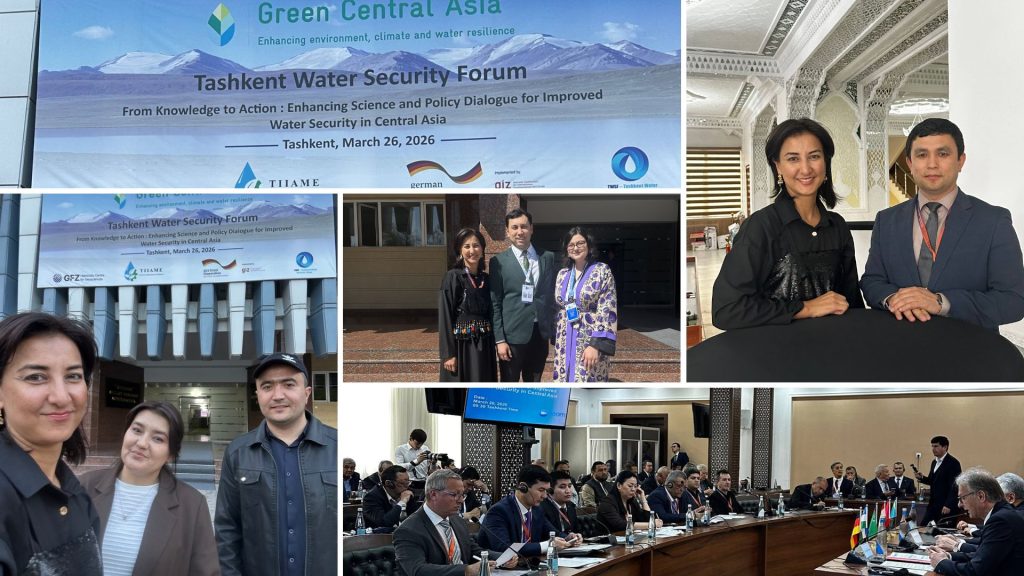
Day two was an entirely different room. The Water Security Forum, hosted at TIIAME National Research University for the eighth time, is a more concentrated, more scientific, more policy-rigorous audience.
Less stage. More substance. Harder questions.
How do we bridge the gap between knowledge and decision-making? Why is progress still so slow, despite everything we already know? What does transboundary water cooperation actually require, when borders are political and rivers are not?
Moving fluently between the wide cross-sectoral room of day one and the focused expert room of day two is itself a craft test. It is the difference between a moderator who runs one default mode and a moderator who calibrates to the audience in front of her.
What stayed with me
If I had to compress the three days into one sentence, it would be this:
We do not lack information. We struggle to translate it into action.
That is the deep problem at the heart of water security in Central Asia. It is also the deep problem of almost every cross-sectoral challenge I have ever moderated – climate, equality, AI, leadership transition, regional cooperation. The science exists. The policy exists. The capital exists. The political will, mostly, exists.
What is missing is the connective tissue.
That is where moderators, facilitators, conveners and consultants become genuinely strategic. We are the translation layer. And when we do our job well, the room leaves capable of doing something that no individual sector in it could have done alone.
What this engagement says about how I work
If your organisation is considering booking me for a high-stakes international forum, here is what Tashkent Water Week makes visible:
1. I prepare for complex content as seriously as the experts do. For three days of moderation across science, policy and finance, I read papers, scanned ministerial positions, studied the regional context, and built a custom framework for navigating the conversations. By the time I arrived, I could ask substantive questions of any sector in the room – and I did.
2. I hold rooms where scientists and policymakers have to find each other. Science-policy interface work is one of the hardest moderation disciplines that exists. Most hosts avoid it. I lean into it, because it is one of the highest-impact rooms a moderator can hold.
3. I work fluently across cultures, languages and contexts. Multilingual in English, Russian and Uzbek. Built professionally between Helsinki and Tashkent. Fluent across Nordic and Central Asian professional conventions. International forums of this scale require a host who can navigate the cultural physics of the room, not just the content.
4. I bring substance, not just stage presence. There is a particular kind of moderator audiences trust the moment she opens the floor, because it is obvious she has done the work. That is the bar I hold myself to. The trust I received from researchers, ministers, professors, students and development chiefs across the three days was earned in preparation, not in delivery.
5. I work as a strategic partner to the organisers. Through SavvY Advisory, my engagement extended beyond moderation into the architecture of the forum itself, shaping the conversations, contributing to the design, and supporting the organisers in turning a dense agenda into a coherent experience.
6. I take stamina seriously. Three days of high-cognitive-load moderation across two distinct audiences and 19 countries is, frankly, a physical job as much as an intellectual one. I prepare for that. I rest for that. I show up able to deliver day three at the same level as day one.
A personal note
This engagement was also personal.
I was born in Uzbekistan. I built my professional life between Tashkent and Helsinki. To moderate a forum of this scale in the place that shaped me, bringing perspectives from Finland, the Nordics and beyond into a Central Asian room, was the kind of full-circle moment a career rarely offers.
It also reminded me of something I want organisers to hear: the most useful moderators are often the ones who carry more than one world inside them. International forums need hosts who can stand fully in the host country’s context and fully in the global context, simultaneously, without flattening either. That is what I bring.
What I do and what I bring to the rooms I’m hired for
I work as a multilingual event host, moderator, facilitator, keynote speaker, panel guest, and organisational community-building consultant across the Nordics, Central Asia and beyond, and as Associate Partner at SavvY Advisory, supporting strategic design and convening work for high-stakes engagements.
I am a strong fit for organisations and forums looking for:
- A moderator for complex international or cross-sectoral forums – water, climate, energy, sustainability, regional cooperation, AI, equality, science-policy interface, foresight.
- A multilingual host comfortable across English, Russian and Uzbek, fluent across Nordic and Central Asian professional contexts.
- A strategic partner to the organisers – not just a stage presence, but a designer of the conversation itself, including agenda architecture, speaker briefing and red-thread design.
- A keynote speaker who can address sophisticated international audiences with substance and warmth.
- A facilitator and consultant for organisations that want their cross-sector convenings, leadership offsites, or internal communities to actually produce action, not just discussion.
If you are organising a forum that needs to deliver more than a programme, if it needs to deliver decisions, alignment and momentum, I would love to hear from you.
A final thank you
To my cooperation partners SavvY, Dr. Abror Gafurov, Nodirbek Turabekov of Iteca Exhibitions, and the entire team – for the trust, the professionalism, and the deep care for the work.
To TIIAME National Research University for hosting the eighth Tashkent Water Security Forum, and for inviting me into a room I will think about for a long time.
To everyone I met across the three days, researchers, practitioners, policymakers, ministers, professors, students, development organisation chiefs, thank you for the openness, the curiosity, and the commitment to keep going on a problem that matters this much.
A particular thank you to Dinara Ziganshina, Jenniver Sehring, Oyture Anarbekov, Oliver Bens, Mohd Faizee and Barbara Janusz-Pawletta for the conversations that sharpened my thinking.
Water is not a regional issue. It is a global one. And what is local is always also global.
I left Tashkent tired, full, and more certain than ever about the work I want to keep doing – at the place where scientists, policymakers, business leaders and communities meet, and where moderation becomes the bridge between knowledge and action.
If that is the kind of room you are building, let’s talk.